
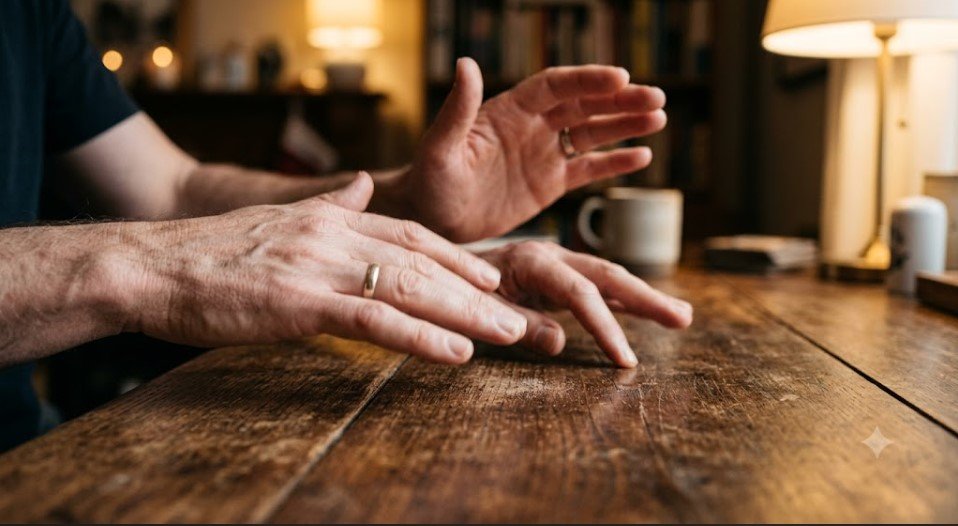
Have you ever listened to a piece of music and felt an undeniable pulse running through it? That steady, driving beat that makes you want to tap your foot, nod your head, or dance?
That feeling has a name.
In the world of music, that essential rhythmic foundation is called pulsamento — the constant, regular pulse that serves as the heartbeat of any musical composition.
But what exactly is pulsamento? Where did it come from? And why is it so important for musicians and listeners alike?
This complete guide answers all your questions.
Read more::Leslie Aday: The Woman Behind Rock Legend Michael Schenker
Table of Contents
- What is Pulsamento?
- The Origins and History of Pulsamento
- How Pulsamento Works in Music
- Pulsamento in Different Music Genres
- Pulsamento vs Other Rhythmic Concepts
- Why Pulsamento Matters for Musicians
- How to Develop a Strong Sense of Pulsamento
- Frequently Asked Questions (FAQ)
- Summary
1. What is Pulsamento?
Pulsamento (pronounced pul-sa-men-to) is a musical term that refers to the regular, recurring pulse or beat that underlies a piece of music. It is the steady heartbeat that gives music its sense of time, movement, and forward momentum.
Simple Definition:
| Term | Definition |
|---|---|
| Pulsamento | The constant, regular pulse or beat that runs through music |
| Alternative Names | Musical pulse, beat, tempo foundation, rhythmic heartbeat |
| Language Origin | Italian/Spanish (from Latin pulsare — to beat or strike) |
In Simple Words:
Think of pulsamento as your heartbeat — it keeps going steadily in the background. Music works the same way. The pulsamento is that steady “tic-toc” that you feel, even when no drums are playing.
Learn more about musical rhythm basics at Britannica – Rhythm in Music
2. The Origins and History of Pulsamento
The concept of pulsamento is as old as music itself. Long before written music existed, humans were creating rhythms with their hands, feet, and simple instruments.
Historical Timeline:
| Era | Development |
|---|---|
| Ancient Times | Drumming and clapping used in rituals and ceremonies — the earliest pulsamento |
| Medieval Period | Gregorian chant had a free-flowing rhythm, but a subtle pulse existed |
| Renaissance (1400-1600) | Written music began to show clear rhythmic notation |
| Baroque Era (1600-1750) | The “tactus” — a steady pulse — became the foundation of all music |
| Classical Era (1750-1820) | The orchestra established clear, regular pulsamento as standard |
| Modern Era | Electronic metronomes and drum machines create perfect, mechanical pulsamento |
The Italian Connection:
The word pulsamento comes from the Italian verb pulsare, meaning “to beat” or “to pulse.” Italian music terminology has influenced Western music for centuries, and pulsamento is no exception.
3. How Pulsamento Works in Music
Pulsamento is not just about hearing a beat — it is about feeling it. Here is how it works:
The Three Layers of Rhythm:
| Layer | Description |
|---|---|
| Pulsamento | The steady, underlying pulse (like a heartbeat) |
| Meter | How pulses are grouped (e.g., 3/4 waltz, 4/4 march) |
| Rhythm | The actual notes played above the pulse |
Example:
Imagine a song in 4/4 time (common time):
- Pulsamento: 1 – 2 – 3 – 4 (steady beat)
- Meter: Groups of 4 beats
- Rhythm: The melody and chords played on top
Even when the drums stop, you can still feel the pulsamento in your body.
4. Pulsamento in Different Music Genres
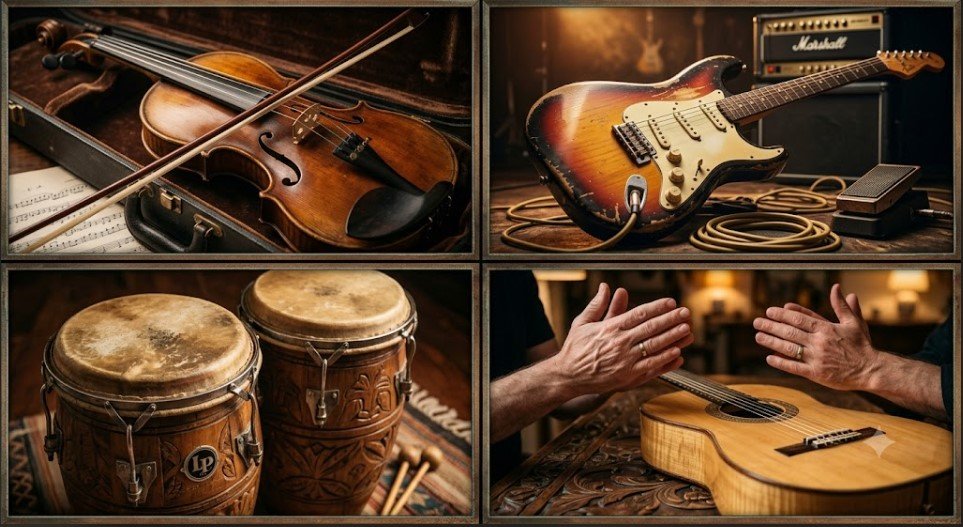
Different music genres treat pulsamento in different ways. Here is how pulsamento appears across musical styles:
Latin Music (Salsa, Son, Rumba)
| Feature | Description |
|---|---|
| Pulsamento Style | Strong, danceable, often syncopated |
| Instruments | Clave, congas, timbales |
| Feel | The “clave rhythm” creates a unique, infectious pulse |
In Latin music, the pulsamento is everything. Without it, dancers cannot move, and the music loses its soul.
Flamenco
| Feature | Description |
|---|---|
| Pulsamento Style | Complex, with hand claps (palmas) and foot stomps (zapateado) |
| Compás | The flamenco pulse — 12-beat cycles in some forms |
| Feel | Passionate, driving, emotional |
In flamenco, pulsamento is called compás — and it is considered the sacred foundation of the art form.
Classical Music
| Feature | Description |
|---|---|
| Pulsamento Style | Steady, conductor-led, often subtle |
| Instruments | Full orchestra with conductor keeping the pulse |
| Feel | Controlled, precise, expressive |
Classical musicians practice with metronomes to develop perfect pulsamento.
Rock and Pop Music
| Feature | Description |
|---|---|
| Pulsamento Style | Strong backbeat (snare drum on beats 2 and 4) |
| Instruments | Drum kit, bass guitar |
| Feel | Energetic, driving, danceable |
The pulsamento in rock music is what makes you want to headbang or tap your foot.
Electronic Music (EDM, House, Techno)
| Feature | Description |
|---|---|
| Pulsamento Style | Perfect, mechanical, unrelenting |
| Instruments | Drum machines, sequencers, synthesizers |
| Feel | Hypnotic, dance-focused, repetitive |
In electronic music, the pulsamento is often called the “four-on-the-floor” beat — a kick drum on every beat.
For more on Latin music rhythms, visit Latin Music USA – PBS
5. Pulsamento vs Other Rhythmic Concepts
Many people confuse pulsamento with other musical terms. Here is the difference:
| Term | Definition | Example |
|---|---|---|
| Pulsamento | The steady, underlying pulse | Your heartbeat |
| Tempo | The speed of the pulse (fast or slow) | 120 BPM (beats per minute) |
| Rhythm | The pattern of long and short notes | “Da-da-da-dum” (Beethoven’s 5th) |
| Meter | How pulses are grouped | 1-2-3, 1-2-3 (waltz) |
| Syncopation | Accents that go against the pulse | Off-beat accents in reggae |
Simple Analogy:
Imagine a train:
- Pulsamento = The wheels turning steadily
- Tempo = How fast the train moves
- Rhythm = The pattern of the wheels (click-clack, click-clack)
- Syncopation = A sudden unexpected clack
6. Why Pulsamento Matters for Musicians
Whether you are a beginner or a professional, understanding pulsamento is essential.
For Beginners:
| Benefit | Why It Matters |
|---|---|
| Keeps time | Helps you play with other musicians |
| Builds confidence | You always know where the beat is |
| Improves practice | Metronome practice develops skill |
For Advanced Musicians:
| Benefit | Why It Matters |
|---|---|
| Groove | The difference between playing notes and making people dance |
| Ensemble playing | Bands that share the same pulse sound tight |
| Expression | You can play “behind” or “ahead” of the pulse for effect |
For Dancers and Listeners:
| Benefit | Why It Matters |
|---|---|
| Movement | You cannot dance without a clear pulse |
| Emotion | A strong pulse creates energy and excitement |
| Memory | Songs with clear pulses are easier to remember |
7. How to Develop a Strong Sense of Pulsamento
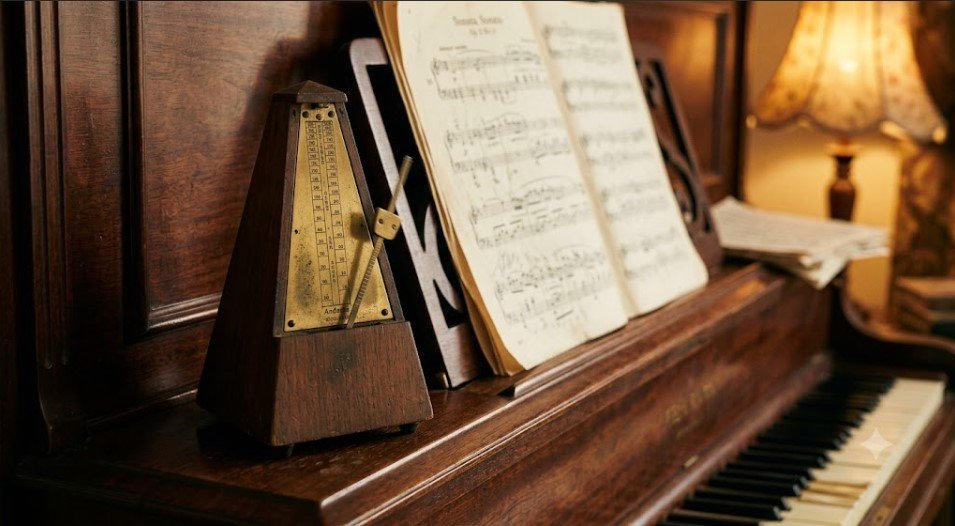
Good news — pulsamento can be learned and improved with practice.
5 Exercises to Improve Your Pulsamento:
| # | Exercise | How to Do It |
|---|---|---|
| 1 | Use a Metronome | Set a slow tempo (60 BPM) and clap or tap along |
| 2 | Tap Your Foot | While listening to music, tap your foot on every beat |
| 3 | Count Out Loud | Say “1-2-3-4” while listening to music |
| 4 | Play with a Drum Track | Use YouTube drum loops and play along |
| 5 | Record Yourself | Record your playing and check if you rush or drag |
Recommended Metronome Apps:
| App | Platform | Price |
|---|---|---|
| Soundbrenner | iOS/Android | Free |
| Pro Metronome | iOS/Android | Free (with paid upgrade) |
| Tempo | iOS | $3.99 |
Download a free online metronome at Google Metronome
8. Frequently Asked Questions (FAQ)
Q1: What does pulsamento mean in music?
A: Pulsamento refers to the regular, recurring pulse or beat that underlies a piece of music. It is the steady heartbeat that gives music its sense of time and movement.
Q2: Is pulsamento the same as tempo?
A: No. Tempo is the speed of the pulse (fast or slow). Pulsamento is the pulse itself. Think of it this way: pulsamento is the “what,” and tempo is the “how fast.”
Q3: How do you pronounce pulsamento?
A: It is pronounced pul-sa-men-to. The emphasis is on the third syllable: “men.”
Q4: What is pulsamento in flamenco music?
A: In flamenco, pulsamento is closely related to compás — the specific rhythmic cycles (often 12 beats) that define each flamenco style (palo).
Q5: Do all music genres use pulsamento?
A: Yes. Every genre of music has some form of pulsamento. Some genres (like electronic dance music) have a very strong, obvious pulse. Others (like ambient music) have a very subtle, slow pulse.
Q6: Can pulsamento change within a song?
A: Sometimes. In classical music, composers sometimes use rubato — a slight speeding up and slowing down of the pulse for emotional effect. However, most music maintains a steady pulsamento.
Q7: Is pulsamento the same as a metronome click?
A: A metronome click is a tool that reproduces pulsamento at a specific tempo. But pulsamento exists naturally in music — a metronome just helps you hear it.
Q8: Why can some people not feel the pulse?
A: Feeling the pulse (also called “keeping time”) is a skill that develops with practice. Some people naturally have better rhythm, but anyone can improve with exercises like tapping along to music.
Q9: What is the difference between pulsamento and rhythm?
A: Pulsamento is the steady background beat. Rhythm is the pattern of notes played on top of that beat. You can have rhythm without a clear pulse (rare), but most music combines both.
Q10: Is pulsamento important for songwriters?
A: Yes! A strong, clear pulsamento makes songs more danceable, memorable, and commercially successful. Most hit songs have a simple, consistent pulse.
9. Summary: What is Pulsamento in One Minute
| Question | Answer |
|---|---|
| What is it? | The steady, regular pulse or beat in music |
| Why is it important? | It gives music movement, time, and energy |
| Where is it used? | Every genre — Latin, classical, rock, flamenco, electronic |
| How to learn it? | Practice with a metronome and tap your foot |
| Related terms | Tempo, rhythm, meter, compás |
Final Verdict
Pulsamento may sound like a complex musical term, but it is something you already know and feel. Every time you tap your foot to a song, nod your head to the beat, or dance to your favorite track — you are experiencing pulsamento.
It is the heartbeat of music — invisible, but absolutely essential.
Whether you are a musician, a dancer, or just a music lover, understanding pulsamento will deepen your appreciation for the art of sound. So the next time you listen to a song, close your eyes and feel the pulse.
That is pulsamento.
External Links & Resources
For more informative articles on music, rhythm, and culture, visit:
👉 Digave – Quality Informational Content
Additional Resources:
About This Article
Last Updated: June 2026
Category: Music / Education / Rhythm Theory
Reading Time: 6-7 minutes
Word Count: ~2,000 words
Focus Keyword: pulsamento
Secondary Keywords: pulsamento music, pulsamento rhythm, musical pulse
Website: Digave.co.uk